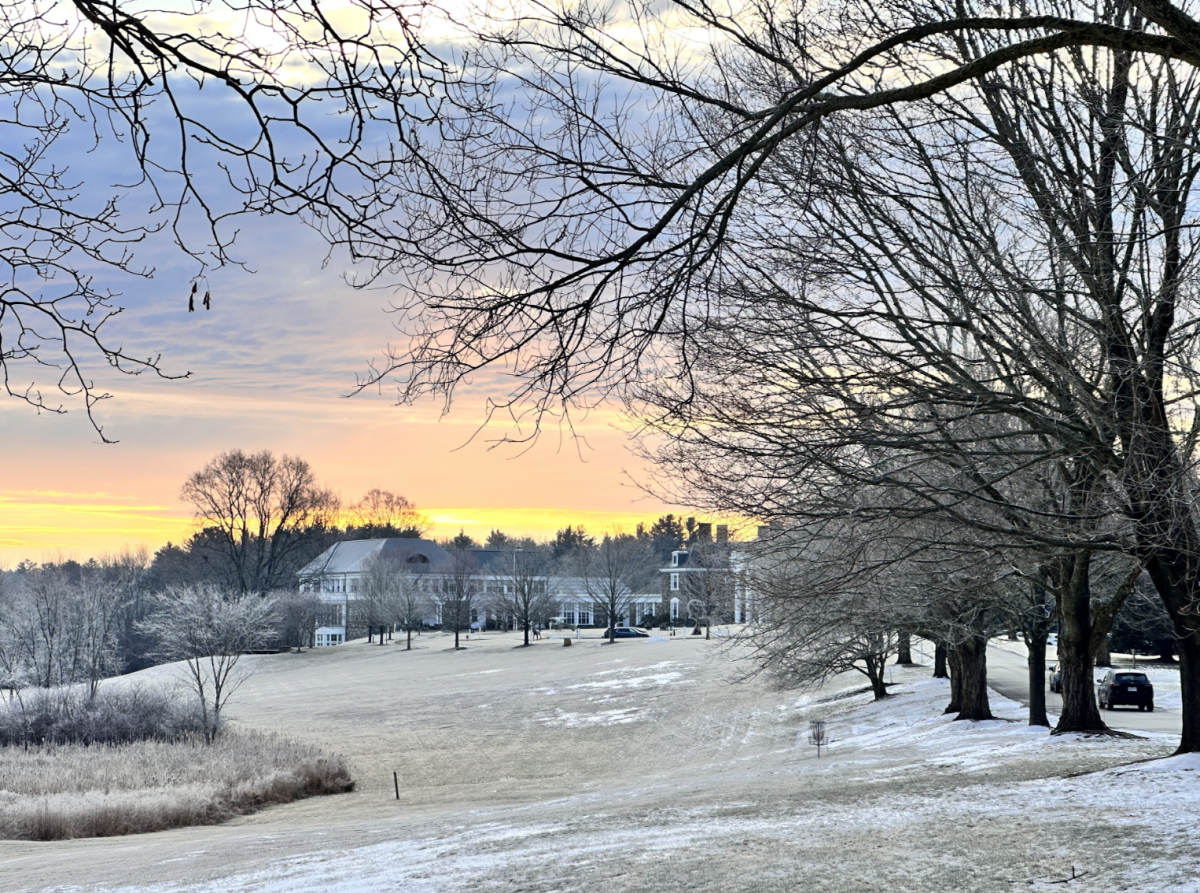
Pingree School was founded in 1960 on land gifted by the Pingree family and was originally a working horse farm. What was originally a family home, became the main school building, and it is hard to not miss the rich history.
65 years later, the campus now includes modern classrooms, new wings, art spaces, and athletic fields. However, change at Pingree extends beyond buildings. The Highlander spoke with longtime faculty members and alumni about some of the most significant ways they’ve seen the school evolve.
Buddy Taft, who first arrived at Pingree in 1970 as a history teacher and coach, reflected on how much has been added to the campus. He said, “There was no theater, academic wing, arts wing, hockey rink, athletic complex or turf field. The Weld gym was our only athletic facility and it had a rubber floor with dead spots.”
Eric Stacey, Pingree alum and Director of Enrollment Management and Admission, remembers his first impressions of the school when he drove up the driveway in 1977. “The first thing that struck me was the incredible view as I looked out over the fields. I noticed the pillars and the fact that this didn’t look like a school at all; it actually looked like a house. At that time, there were just over 200 students enrolled, so the entire student body could easily fit in a smaller version of the cafeteria, as well as the classrooms (mostly old bedrooms) in both the main house and a low-slung science wing located where the Academic Wing is now.” Mr. Stacey explained that “as our student body grew from approximately 220 in 1981 to our current size, approximately 395 we definitely needed more space” and that led to the additions we see today around campus
Amanda Nasser, a Pingree alum and current history teacher, also mentioned many of the renovations that she has seen since her days as a student. “When I was a student, the main gym was the Weld, and we often had to wait late into the evening for basketball practice, especially during winter when volleyball was also in season! The Commons has also gone through a few transformations; there used to be no upper Commons, and students sat wherever there was space at lunch. Today it seems like certain grades sit at the same tables again and again.”
History teacher Anna McCoy, who has been on the campus since she was born, recalled how the campus has changed. “When they added the theater I was probably about 8 and I remember thinking it was the most amazing place I’d ever seen.” She also remembered how the natural landscape has changed. “The driveway was lined with beautiful elm trees, all of which have since died due to Dutch Elm disease.”
Despite these expansions, Pingree has shown a strong commitment to retaining its scenic environment and deep connection to nature. Ailsa Steinert, a longtime Pingree faculty member who chaired the English department for 20 years, reflected how she cherished the moments in nature during her long tenure and how she still values her visits to the pond. She shared, “It’s still my absolute favorite thing to do is to walk down the driveway and look over at the marsh and watch the birds, and then look across at the fields, which they’ve done a beautiful job with.” She encouraged students to find one of her favorite paths on campus that goes across the field and the edge of the wood and follow it around the pond and back.
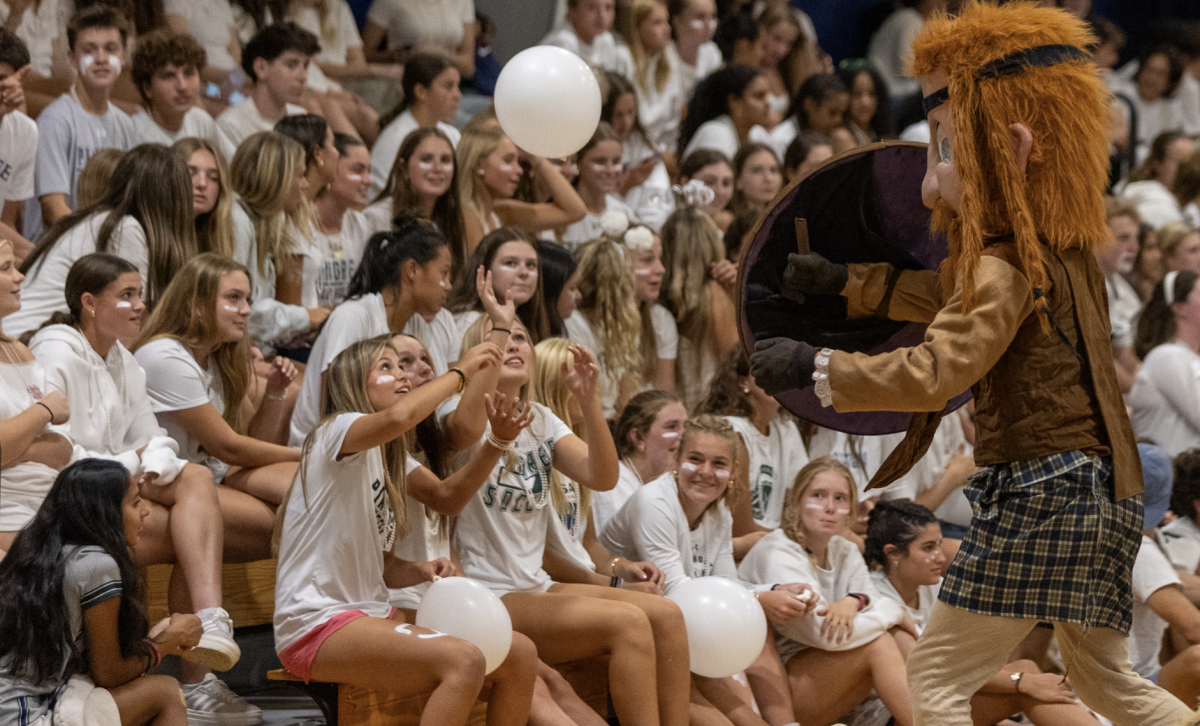
Many former students and faculty highlighted how the student body has changed. For Anna McCoy, the “biggest change is the size of the student body — when I started teaching, classes were about 70 students. Now they are almost 100!” Eric Stacey added, “ We have more students in each grade, but they are still the same, as they are great citizens, top scholars, and wonderful artists/athletes. Our acceptance rate in the admission department has gone down from what it was years ago because our popularity has continued to grow. Also, there are more faculty applicants each year when we hire new teachers.” He says that the bottom line is “that we enroll terrific kids and hire smart, talented teachers. That has been a constant.”Amanda Nasser brings up another point in that “Pingree has become much more diverse in so many ways, culturally, academically, and personally. There are more perspectives represented and more voices being heard, which makes the community even richer. We also now offer a wider range of courses and opportunities for students to explore different interests.”
According to Anna McCoy and Amanda Nasser dances, which used to be the main social events on campus, have shifted in popularity. Anna McCoy mentioned how they “had to have double the number of chaperones, and essentially kick everyone out at the end because people didn’t want to leave.” Eric Stacey mentioned that “despite greater distances between our student’s homes students still find ways to connect over the weekend and there still seems to be strong connections among all of our students as they form strong relationships because of our relatively small community.” Buddy Taft reflected on when Pingree had a dress code: “One area of change has been the dress code (or lack thereof).” He adds, “There were a few times a year when formal wear was required. The male faculty members always wore ties and jackets and no one wore jeans. We did have a fundraiser once a month where you could pay $1 and wear jeans.”
Buddy Taft noted how he’s seen “there is significantly more importance put on sports” today and many noted how they’ve seen how it’s more common for students to play 1 or 2 seasons when students used to participate in all three seasons. Eric Stacey noted a long history of Pingree sports excellence, “Our athletes have always been stellar.”
Over the past 65 years, Pingree’s campus and programs have transformed in many ways. However, there has always been a consistent message regarding Pingree’s values and its strong sense of community.