


When people think about the effects of war, they often imagine rising gas prices, damaged infrastructure, and shortages of fuel. But one surprising consequence of the recent conflict involving Iran is a growing shortage of helium.
It turns out that Helium isn’t just the gas that fills balloons for parties; surprisingly enough, it is also a key element in the medical field. Between powering Magnetic Resonance Imaging (MRI) machines and being the key substance used in respiratory therapy, helium is a medical necessity. In addition, Reuters reports that helium “is used in several key stages of chipmaking, including cooling, leak detection and precision manufacturing processes.”
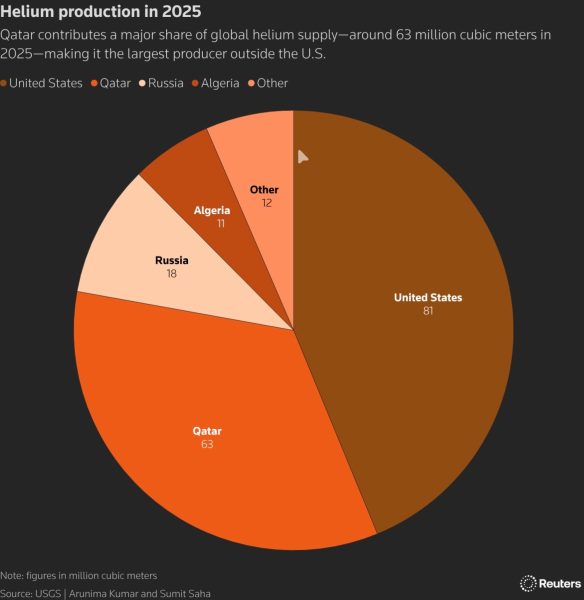
The shortage of helium began when Iranian strikes hit two liquefied natural gas facilities in Qatar, forcing the country to stop helium production. This is a major issue because Qatar supplies about one-third of the world’s helium. In addition, Qatar produced around 63 million cubic feet of helium in 2025, making it the largest producer outside of the United States. Because helium is a byproduct of natural gas processing, damage to Qatar’s facilities also means a loss of helium production. CBS News reports that repairs are expected to take three to five years, creating concerns about long-term supply problems.
Although much of the public attention has focused on rising oil and gas prices, experts warn that helium shortages may soon have serious consequences. Many industries only keep about two months of helium reserves, meaning the effects of shortages could appear quickly if supplies continue to drop.
One of the most important industries affected is health care. Helium is essential for operating MRI machines, which use superconducting magnets cooled by around 2,000 liters of liquid helium per machine. Without helium, MRIs cannot function. These machines are vital for diagnosing many conditions, including brain tumors, strokes, spinal injuries, and cancer. Hospitals across the United States are already seeing helium prices rise by as much as 30%, and suppliers are rationing deliveries to make sure medical facilities receive enough.
While hospitals are being prioritized, other sectors are beginning to feel the impact as well–especially technology manufacturing. Helium is widely used in the production of semiconductor chips, where it cools silicon wafers during manufacturing. These chips power laptops, smartphones, gaming systems, and even modern cars. If helium supplies continue to shrink, semiconductor manufacturers may be forced to slow or even stop production.
Industry leaders are already seeing signs of disruption. According to a semiconductor executive, the conflict has tightened helium supply and is already affecting production, while transportation delays are making the problem worse. If chip production slows, consumers could soon notice higher prices and fewer available products. Electronics like smartphones, computers, and cars could become more expensive as manufacturers struggle to keep up with demand.
The helium shortage is also impacting scientific research. Some university laboratories have already been forced to pause projects because their helium supplies were cut.
 What makes the helium shortage especially concerning is that helium is nonrenewable. It forms deep within the Earth over millions of years, and once it escapes into the atmosphere, it is lost forever.
While balloons may seem like the most obvious use for helium, they are far from the most important. The current conflict in Iran has shown how interconnected global supply chains truly are. Damage to natural gas plants thousands of miles away can eventually affect hospitals, electronics, research labs, and even everyday consumers.
For students, this means the effects of international conflict are closer to home than they may seem. A war in the Middle East could influence the cost of a new phone, the availability of a medical scan, or the pace of scientific innovation. Helium may be invisible, but its shortage could and does have very visible effects on our daily lives.


